

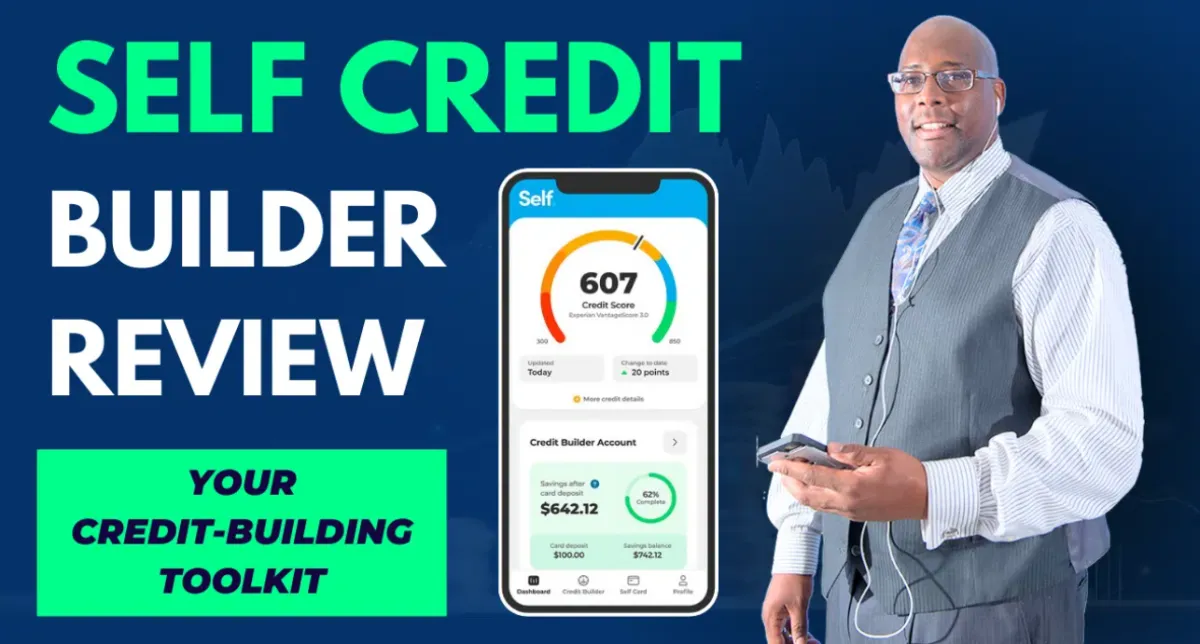
Self Credit Builder Review: Does It Actually Work?
Quick Verdict: Self Financial is one of the most accessible credit-building tools on the market. No hard credit pull. No existing credit needed. Just consistent payments that get reported to all three bureaus. If you're starting from zero — or rebuilding — this is worth a serious look.
Honestly, building credit from scratch feels like a trap sometimes.
You need credit to get credit. Banks want a history you don't have yet. And every rejected application makes things worse. I've talked to hundreds of clients stuck in exactly this spot.
Here's the thing — Self Financial was designed to break that cycle. In this Self Credit Builder review, I'll walk you through how it works, what it costs, who it's best for, and whether the results are actually worth it.
Let's get into it.
What Is Self Financial?
Self Financial (formerly Self Lender) is a fintech company that helps people build credit. They do this through three core products: credit builder loans, a secured Visa credit card, and rent and utilities reporting.
What makes them different? You don't need a credit score to get started. They don't do a hard pull on your report. That means applying won't hurt your score.
Over 1 million people have used Self Financial on their credit journey. That's not a coincidence — their model works for a lot of people who feel shut out of traditional credit products.
How Does the Self Credit Builder Loan Work?
Most people get confused about this part. A credit builder loan isn't like a normal loan.
Here's how it works step by step:
You open a Credit Builder Account with Self.
You choose a monthly payment plan (between ~$25–$150/month).
Self holds your payments in a FDIC-insured Certificate of Deposit.
Every payment gets reported to Experian, Equifax, and TransUnion.
When the loan term ends, you get the savings amount (minus fees).
So you're not borrowing money upfront. You're essentially saving money while proving to credit bureaus that you pay on time. It's a credit-building savings plan in disguise.
From my clients' experience, people who make consistent on-time payments often see credit score increases of 30–60 points within 6–12 months. Results vary based on your starting point, but the mechanics are sound.
Self Credit Builder Products: A Full Breakdown
Credit Builder Loan
This is Self's flagship product. You pick a plan, make monthly payments, and build a payment history that gets reported to all three bureaus.
No hard credit check to apply
One-time $9 administrative fee to open the account
Loan amounts typically range from $520 to $1,700
Terms run 12 or 24 months
You receive the saved funds at the end of the term
The $9 fee is the main cost to start. That's a reasonable entry point if you're serious about building credit.
Secured Visa Credit Card
After you've made at least three on-time payments and have at least $100 in your Credit Builder Account, you can unlock the Self Visa® Credit Card.
Starting credit limit: $100 to $3,000 (based on your deposit)
Annual fee: $25
APR: approximately 28.24%
No fee to replace a lost or stolen card
Using this card responsibly — keeping your balance low and paying on time — gives your score another boost. It's not a premium card, but it does the job for credit-building purposes.
Rent and Utilities Reporting
This one gets overlooked a lot. Self lets you report your rent payments to the credit bureaus through LevelCredit. This is available at no extra charge for rent.
Utilities can also be added for $6.95/month. This is optional, but if you pay rent consistently, it's an easy win.
The feature is available in all 50 states.
What Does Self Credit Builder Cost?
Let me break down the actual numbers so there are no surprises:
FeeAmountCredit Builder Loan admin fee$9 (one-time)Monthly loan payment$25–$150 depending on planSecured card annual fee$25/yearUtilities reporting (optional)$6.95/monthCard replacementFree
The interest you pay on the loan is factored in — so the amount you receive at the end will be less than what you paid in total. Think of the interest as the "cost" of building your credit history. For most clients I've worked with, it's worth it at this price range.
The interest you pay on the loan is factored in — so the amount you receive at the end will be less than what you paid in total. Think of the interest as the "cost" of building your credit history. For most clients I've worked with, it's worth it at this price range.
Real User Experiences: The Good and the Not-So-Good
What People Love
Most users praise how simple the app is. Apple App Store and Google Play both show strong ratings for the Self app. The autopay feature makes it easy to never miss a payment.
Users with no credit history frequently report score increases of 40+ points within their first year. The combination of the credit builder loan and the secured card tends to accelerate results.
What to Know Before You Sign Up
A small number of users have reported delayed fund releases at the end of their loan term, and occasional unexpected account closures. Self's Trustpilot rating reflects some frustration from users who experienced these issues.
Here's my honest take: no credit-building tool is perfect. But delayed payouts and communication issues are worth knowing about going in. Make sure your contact info is current in the app, and keep an eye on your account as you approach the end of your term.
Self holds a B rating from the Better Business Bureau, which is respectable for a fintech company in this space.
Self Financial vs. Competitors
Self vs. CreditStrong
Both companies target the same audience: people with limited or poor credit history. Neither requires a credit score upfront. Neither does a hard pull.
The key difference is product breadth. Self offers the credit builder loan plus a secured card plus rent reporting. CreditStrong focuses primarily on the credit builder account. If you want an all-in-one credit tool, Self has the edge here.
Self also has a larger user base — over 1 million customers — while CreditStrong doesn't publish comparable numbers.
Self vs. Fizz
Fizz targets a younger demographic (especially college students) and works differently — it functions more like a debit card with credit-reporting features. Self's loan structure is more traditional and may suit people who want a structured, automatic savings component along with credit building.
Who Should Use Self Credit Builder?
Self is a strong fit if you are:
Starting from zero — no credit history at all
Rebuilding after financial setbacks — past delinquencies, collections, or bankruptcy
Looking for a low-risk entry point — the $9 fee is about as low as it gets
Disciplined with monthly budgeting — the program works best when you make every payment on time
It's less ideal if you need a large credit limit right away, or if you're looking to build business credit specifically. In those cases, I'd recommend we talk about a more tailored strategy.
My Verdict: Is Self Credit Builder Worth It?
Look — Self Credit Builder isn't magic. No tool is. But it's one of the most accessible, low-barrier credit-building options I've seen in years of working with clients.
The combination of a structured loan, a secured card, and rent reporting covers three major credit factors at once: payment history, credit mix, and account age. That's a smart approach.
If you're consistent and patient, Self can meaningfully move the needle on your score. The fees are reasonable, the app is easy to use, and the reporting to all three bureaus is the real value here.
My recommendation: If you need to start building credit now, Self Financial is worth trying. Just go in with realistic expectations — credit building takes time, and Self is a tool, not a shortcut.