

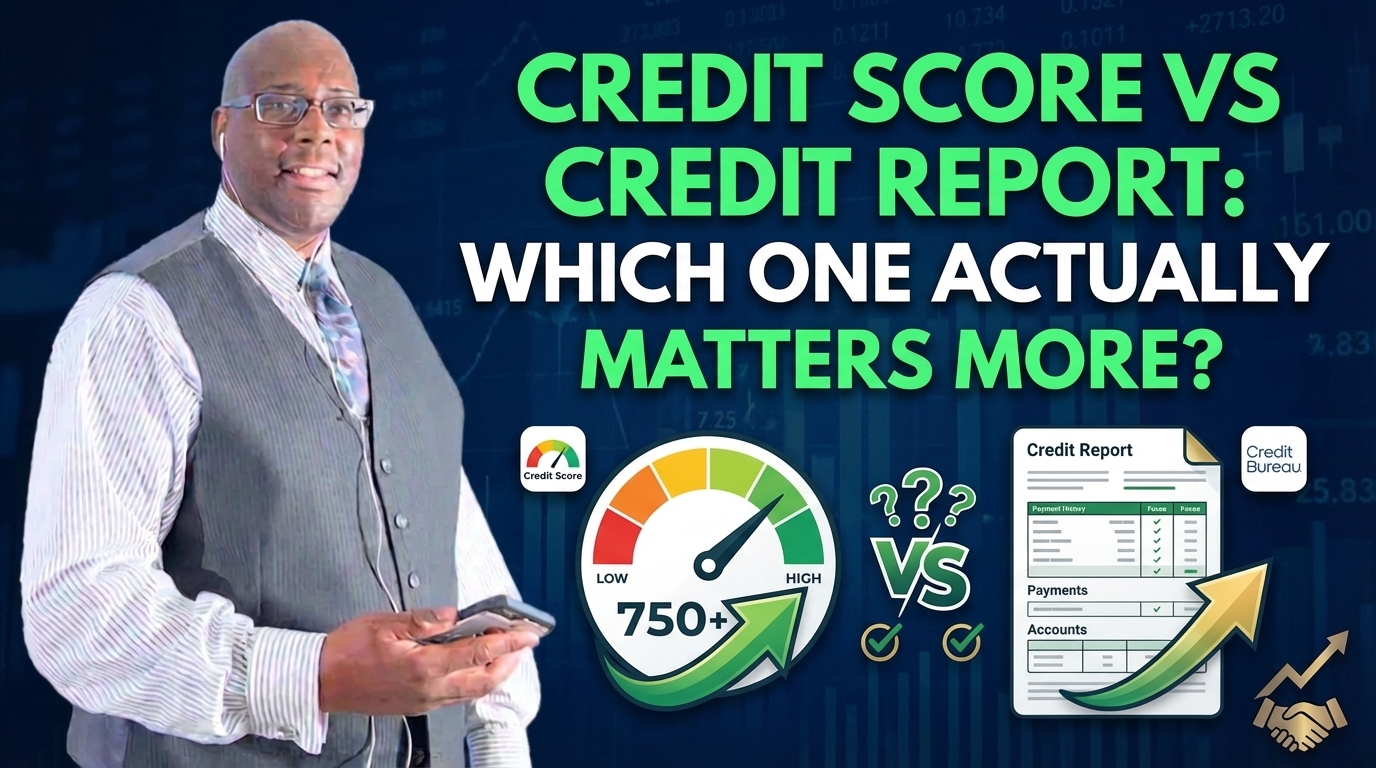
Credit Score vs Credit Report: What Matters More?
So you've been working hard on your credit. You pay your bills on time. You keep your balances low. You're doing everything right — or so you think.
Then someone asks: "What's your credit score?" And you freeze. Because honestly? You're not sure if that number tells the whole story.
Here's the thing — your credit score vs credit report debate is one of the most misunderstood topics in personal finance. Most people focus only on the score. But smart borrowers? They dig deeper.
Let me break this down for you in plain English.
What's the Difference Between a Credit Score and a Credit Report?
Think of your credit report as your full financial transcript. It lists everything — every account you've opened, every payment you've made (or missed), every hard inquiry, and even your address history.
Your credit score, on the other hand, is like your GPA. It's a single number (usually between 300 and 850) that summarizes what's in that transcript.
One is the story. The other is just the headline.
Both matter. But they don't matter equally — and that distinction could save (or cost) you thousands of dollars.
What Makes Up Your Credit Score?
Your credit score is built from five key factors. Most people know them, but very few understandhowthey're weighted.
Here's a quick breakdown:
Payment history— 35% (biggest factor by far)
Amounts owed— 30%
Length of credit history— 15%
Credit mix— 10%
New credit/inquiries— 10%
Now here's something most guides miss. A lot of people think a long credit history automatically boosts their score. That's only partially true.
Credit bureaus typically focus on the last two years of your payment history most heavily. So even if you have a 20-year-old account, one missed payment in the past 24 months can drag your score down fast.
From what I've seen working with clients over the years — consistent recent payments beat a long but rocky history every single time.
VantageScore vs FICO Score: Why You Might Be Looking at the Wrong Number
Here's where things get tricky. There are two major credit scoring models: VantageScore and FICO.
VantageScore is the one you'll usually see on free credit apps like Credit Karma. FICO is what most banks and mortgage lenders actually use.
These two models use different algorithms. So your score can look very different depending on which one you check.
I had a client — let's call him Marcus — who was pumped about his 700 VantageScore. He thought he was golden. When he applied for a car loan, the dealer pulled his FICO score. It came back at 648. He nearly fell out of his chair.
That's not a small gap. That's the difference between a good rate and a painful one.
Bottom line:Always check your FICO score before applying for any major credit product. Don't let a vanity number fool you.
Why Your Credit Report Matters More Than Your Score
Honestly, if I had to choose one to focus on — it's the credit report. Every single time.
Here's why. Your credit score is calculatedfromyour credit report. If your report has errors, your score is wrong. Simple as that.
And errors on credit reports are more common than you'd think. Studies have shown that a significant percentage of Americans have at least one mistake on their report that could affect their creditworthiness.
What kind of errors? Things like:
Accounts that don't belong to you
Incorrect late payment records
Duplicate accounts
Wrong personal information (old addresses, misspelled names)
Even with a decent credit score, a lender can still deny you based on what theyreadin your full report. They don't just see a number — they see the story behind it.
Action step: Pull your free credit report from AnnualCreditReport.com at least once a year. Review every line. Dispute anything that looks off.
How Many Credit Accounts Do You Actually Need?
Let's bust a popular myth: you don't need 10 credit cards and 5 loans to have great credit.
In fact, I've helped clients qualify for mortgages with as few as three to four accounts. That might look like:
One department store card
One auto loan
One or two major credit cards
As long as those accounts are in good standing and you're making consistent payments, that's enough to show lenders you can manage credit responsibly.
More isn't always better. Too many accounts can actually work against you — especially if they were all opened recently.
The Truth About Inquiries and New Accounts
Every time you apply for credit, a hard inquiry is added to your report. One or two? No big deal.
But here's the line lenders watch closely: more than eight inquiries within a 12-month period on a single bureau is a red flag. It signals financial stress or desperation — even if that's not the case.
The same logic applies to opening too many new accounts at once. Lenders want to see stability, not a credit shopping spree.
Therefore, be strategic. Space out your credit applications. Only apply when you genuinely need to.
Income, Employment, and Your Credit File
One thing people rarely talk about — your income and employment info also shows up in your credit file. And it matters more than most people realize.
If you're retired or on SSI, lenders may view those income sources as limited. That can lead to lower credit limits or outright denials — even with a solid score.
One strategy I've recommended to clients in this situation: if you have a side business, consider listing it as your primary employment on your credit file. It shows lenders a potentially more flexible income picture.
Meanwhile, always keep your employment information current and accurate across all three bureaus.
Your Credit Report is Your Financial Health Record
Here's the big takeaway. Your credit score gets all the attention. But your credit report is the real document that shapes your financial life.
It's what lenders read. It's what gets you approved or denied. And it's what you have the most control over.
Focus on keeping your report accurate and clean. Make your payments on time — especially in the last two years. Keep your accounts stable. And understand the difference between VantageScore and FICO before you walk into a lender's office.
Do those things, and the score will follow.