

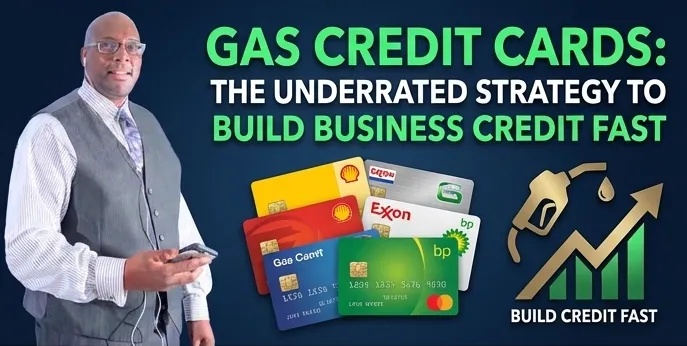
Gas Credit Cards: The Underrated Strategy to Build Business Credit Fast
You've probably seen ads promising "$150,000 in business credit." Sounds amazing, right? But here's the thing — most of those offers aren't what you think. Understanding what's actually behind those numbers is the first step to building real credit that works for you.
Gas credit cards are one of the most overlooked tools in the credit-building playbook. I've seen this strategy work firsthand with clients who felt completely stuck. Whether your credit score is sitting at 450 or 640, there's a practical path forward — and it starts at the pump.
What "$150,000 in Business Credit" Actually Means
Let's be real. When someone promises you $150,000 in business credit, they're usually talking about store cards and gas credit cards— not Visa, Mastercard, or a traditional business line of credit.
Real business funding is money you can transfer to your bank account and use freely. Store cards and gas cards, on the other hand, are limited to specific vendors. That's an important distinction.
Most people don't know this going in. From my clients' feedback, confusion about this point costs them months of effort chasing the wrong goal.
Why Gas Credit Cards Deserve More Attention
Here's a strategy that doesn't get enough credit (pun intended): using gas cards as abridgeto build your credit profile.
Gas credit cards from major brands like Shel land ExxonMobil report to credit bureaus. Every on-time payment adds positive history to your report. That activity can lift your score over time — both personally and for your business.
The best part? You can start this strategy even with a damaged credit score.
How to Use Citibank as Your Starting Point
Citibank is the backbone of this strategy. Here's why: Shell and ExxonMobil both have strong ties to Citibank. When you build a relationship with Citibank first, the gas card approvals become much smoother.
Start With a Secured Credit Card
A Citibank secured credit cardis accessible even with a credit score as low as 450–480. Because you're backing it with your own deposit, the bank takes on less risk — and approval is more likely.
Deposit a few hundred dollars. Use the card responsibly. Pay it off every month. That's it. Within 6–12 months, you're establishing a real track record with Citibank.
Pro tip: Treat this card like a debit card. Never carry a balance above 30% of your limit.
Custom HTML/CSS/JAVASCRIPT
Bringing Costco Into the Picture
Costco plays a surprisingly important role here. Costco's co-branded credit card is issued through Citibank. That means Citibank sees your Costco transaction history — and it counts in your favor.
Applying for a Costco Executive card under your business name puts your business into Citibank's database. That's a smart move, even before you touch a gas card. It signals to the bank that you're a real business with real spending activity.
Once you're in the Citibank ecosystem, applying for a Shell business gas card becomes the natural next step.
What If Your Credit Score Is Around 640?
Honestly, a 640 credit score opens more doors than most people realize. At this level, you can apply directly for Shell and ExxonMobil business credit cards— no net-30 accounts required.
This is great news. You skip the slower net-30 process entirely. You also reduce your dependency on the Dun & Bradstreet rating system, which can take time to build from scratch.
A 640 score combined with a few months of Citibank history? That's a strong foundation.
The Step-by-Step Path Forward
Here's the sequence I walk my clients through:
Open a Citibank secured credit card— even with a 450+ score
Apply for a Costco Executive card under your business name
Apply for a Shell personal gas card if your business doesn't yet qualify
Upgrade to Shell or ExxonMobil business credit cards once your score hits 640+
Maintain low utilization and on-time payments every single month
This isn't a shortcut. But it's a reliable, repeatable system.
Don't Overlook Your Corporate Identity
Look, this is one step most guides skip entirely — and it costs people real money.
If you have an established business, your corporate email address matters. Many card applications get denied simply because applicants used a Gmail or Yahoo account instead of a professional email tied to their business domain.
Set up a professional email like [email protected] before applying. It signals legitimacy to lenders and can be the difference between approval and denial.
Building Both Personal and Business Credit at the Same Time
Here's what I love about this strategy: it works on both credit profiles simultaneously.
A Shell personal gas card builds your personal credit score. A Shell or ExxonMobil business card builds your business credit. Done right, you're making progress on both fronts with just one tool.
From my experience working with small business owners, the biggest mistake I see is waiting too long to start. People assume they need perfect credit to begin. They don't.
Start where you are. Use what you have access to. And build from there.
Common Questions About Gas Credit Cards and Business Credit
Final Thoughts: Start Small, Think Big
Gas credit cards won't build you a million-dollar credit line overnight. But used strategically — starting with Citibank, moving through Costco, and landing on Shell or ExxonMobil business cards — they're a genuinely effective tool.
I've seen this path work for complete beginners with damaged credit. I've also seen it accelerate growth for established businesses looking to diversify their credit portfolio.
The key is consistency. Pay on time. Keep utilization low. And don't rush the process.
If you want a personalized plan to build your business credit the right way, let's talk.