

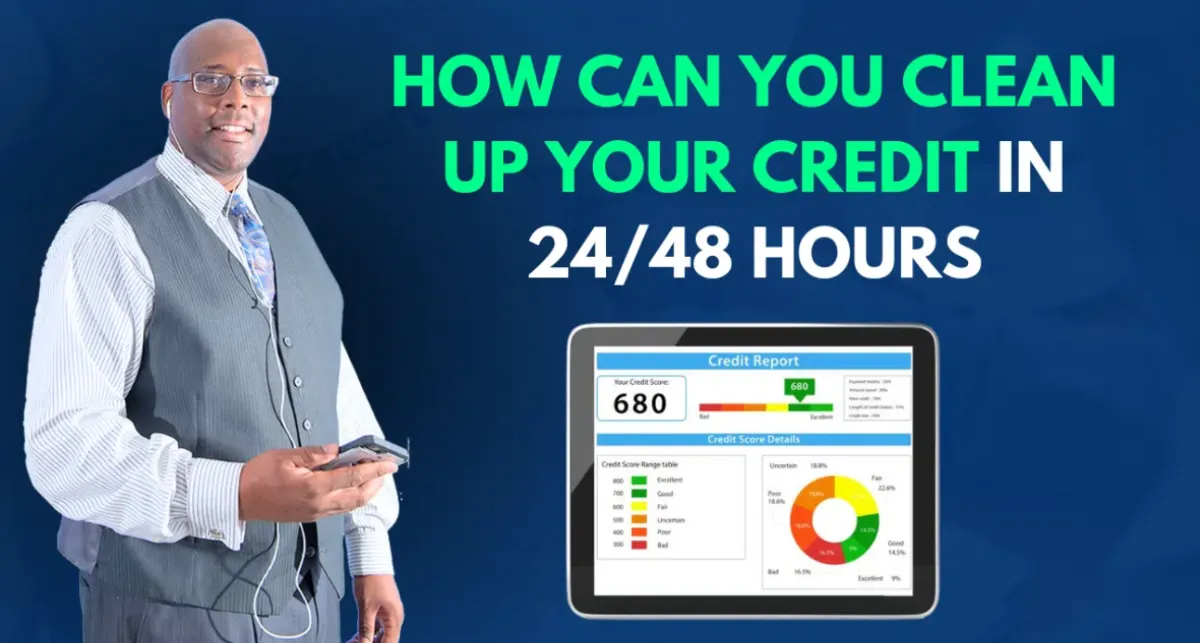
How to Clean Up Your Credit Fast (The Real 48-Hour Strategy)
Honestly, most credit advice online is either wrong or dangerously incomplete. I've worked with over 100,000 entrepreneurs and everyday people on their credit. And I can tell you — the "just call the bureau" advice is costing people thousands of dollars and years of progress.
Here's the thing: there's a real strategy to clean up your credit fast. It combines a short window of opportunity with solid legal rights most people don't know they have.
Let me walk you through exactly what works — and why.
Why Most Credit Disputes Fail Before They Start
Look, this surprised even me when I first dug into it. When you dispute electronically or by phone, the bureaus don't do a real investigation. They take your name, address, and a few digits of your account number. Then they run it through their own system and mark it "verified."
That's it. No real review. No documentation required.
Those negative items might vanish for 48–72 hours. Your FICO 9 and Vantage scores can spike fast. But the investigation window stays open for 30 days. After that? Most items come right back.
Electronic disputes also strip away your legal paper trail. And without that trail, you have no leverage. You're essentially handing the bureaus a free pass.
The Credit Data Secret the Bureaus Don't Advertise
Here's something most "credit experts" never explain. The big three bureaus — Experian, Equifax, and TransUnion — don't actually own all your data. A large chunk of it comes from third-party data companies like:
- Lexis Nexis
- Core Logic
- Clarity
- DataX / TeleTrack / Factor Trust
When you dispute without proper documentation, your info just bounces between these interconnected systems. They're often owned by the same parent companies. Nothing actually changes.
This is exactly why Experian recently faced legal action for violations including:
- 15 USC 1681e(b) — Failing to maintain report accuracy
- 15 USC 1681i(5) — Failing to properly reinvestigate disputes
- 15 USC 1681c — Including outdated information in reports
Knowing these codes puts real power in your hands.
The Real 48-Hour Credit Fix Strategy
So here's where it gets interesting. Yes — electronic disputes do create a temporary window. After you file one, those negative items often disappear for 48 to 72 hours. Your scores jump during this time. Specifically:
- FICO 9 — Used by Navy Federal, PenFed, Wells Fargo, US Bank
- Vantage 3 — Used by Baxter Credit Union (BCU), Veridian
- Vantage 4 — Used by NASA Credit Union
Don't waste that window. You have roughly 30 days before items may return. That's your opening to apply strategically.
Where to Apply With Each Score Model
If your FICO 9 is elevated:
Apply to Navy Federal (TransUnion), PenFed (Equifax or Experian depending on product), Wells Fargo, or US Bank. Move quickly — this window closes.
If your Vantage 3 is elevated:
BCU and Veridian are your best bets. Both pull TransUnion Vantage 3 for their approvals.
The goal isn't to game the system permanently. It's to use a legal, temporary improvement to qualify for accounts that help you build long-term credit history.
How to Permanently Remove Collection Accounts
Here's the strategy most people completely miss. Most collection companies can't legally report those accounts to begin with.
When a creditor charges off an account, a specific chain of events is supposed to happen:
1. They file an insurance claim (they're required to carry insurance bonds)
2. They write off the debt as a loss with the IRS
3. They should issue you a 1099-C form for that forgiven debt
That debt has already been settled — legally. When the original creditor then sells it to a collection agency, that "dead debt" may have already been satisfied through insurance and tax write-offs.
So when a collector calls, you can ask two powerful questions:
- "Can you prove this debt hasn't been discharged with the IRS?"
- "Where is the 1099-C form for this charged-off amount?"
Most collectors can't answer those questions. And if they can't prove their legal right to collect, they cannot legally park that account on your credit report.
This isn't a loophole. It's your right under federal law.
The Paper Trail That Changes Everything
Stop disputing electronically if you're serious about results. Here's the proper process:
1. Write a formal dispute letter — reference the specific USC violations
2. Send via certified mail with return receipt — this creates legal documentation
3. Keep copies of everything — every letter, every response
4. Cite 15 USC 1681e(b), 1681i(5), and 1681c directly in your letters
5. File a CFPB complaint if items reappear without proper verification
When you send certified letters, you force bureaus to create a real paper trail. When they ignore it or fail to follow proper procedure, you've documented their violation. That becomes your leverage.
From my clients' feedback, the ones who follow this certified mail process see far more consistent long-term results than those who dispute online.
What About Zero-Balance Charge-Offs?
Here's something that'll save you real time. If you have charge-offs on your report showing a zero balance — don't bother disputing them right now.
FICO doesn't factor zero-balance charge-offs into your score calculation. Focus your energy on collections and charge-offs that still carry a balance. Those are hurting your numbers. The zero-balance ones? Not worth the effort yet.
## How to Lock In Gains After Disputes
Once you've removed negative items — even temporarily — you need to strengthen your file. Here's what works for FICO 9 and Vantage score maintenance:
- Authorized user tradelines — Get added to accounts with long history and low utilization
- Rental payment reporting — Services like RentReporters can add years of on-time payments to your file
- Utility bill reporting — Experian Boost and similar tools count bills you're already paying
- Subscription reporting — Some tools count streaming and phone bills too
For FICO 8 (the score Chase, Capital One, and most major banks use), you'll need primary credit accounts — not just tradelines. One option worth considering: the Capital One Spark Classic has approved clients with 580+ scores, even just one year after a charge-off.
Don't Fall for the Identity Theft Shortcut
Look, some "credit repair" programs tell you to simply claim identity theft to wipe your report. I have to be straight with you — this is risky territory.
Yes, bureaus often remove items when an identity theft claim is filed. But you'd need to:
1. File an official FTC report
2. Have it notarized
3. Truthfully certify the account wasn't yours
If those items were actually yours, submitting a false FTC affidavit could be considered fraud. There are real legal risks here.
You don't need to go there. The certified mail process, the 1099-C questions, and your FCRA rights are more than enough to build a legitimate case — without putting yourself at legal risk.
The Combined Strategy: Speed + Permanence
Here's the truth most guides miss: the best approach uses both short-term and long-term methods together.
Step 1: File electronic disputes to create a temporary score window.
Step 2: Apply immediately to lenders that use FICO 9 or Vantage 3/4 during the window.
Step 3: Simultaneously send certified mail disputes with proper USC references.
Step 4: Challenge collection accounts directly on their legal right to collect.
Step 5: File CFPB complaints if bureaus fail to properly reinvestigate.
The credit bureaus are counting on you not knowing this stuff. They just faced lawsuits for millions over these exact violations. Don't let confusion keep you from exercising your rights.
Want help building your specific dispute strategy? I work with clients one-on-one to map out exactly which accounts to target, which scores to leverage, and when to apply. Let's talk.